High mast lighting plays a critical role in illuminating large outdoor spaces where standard street lighting is insufficient. From highways and ports to stadiums and airports, high mast light systems provide powerful, wide-area illumination designed for safety, visibility, and operational efficiency.
This article explains what high mast lights are, how they work, their key applications, advantages, and how to choose the right system for your project.
What is a High Mast Light?
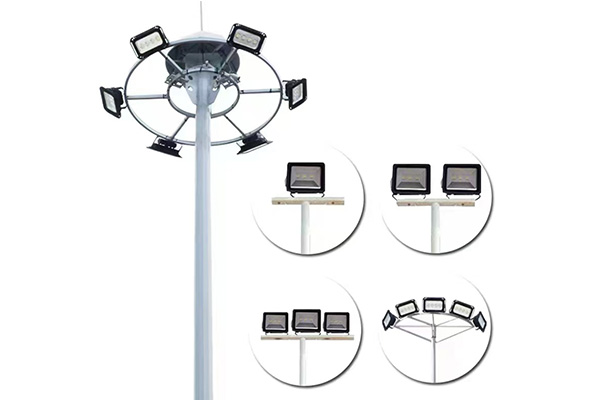
A high mast light is a tall lighting structure, typically ranging from 15 meters to over 40 meters in height, equipped with multiple high-power LED floodlights mounted on a single pole. These systems are engineered to provide uniform lighting over a large surface area.
Unlike traditional street lights, high mast lighting reduces the number of poles needed, making it ideal for open and expansive environments.
Key Components of High Mast Lighting Systems
A complete high mast lighting system generally includes:
1. Mast Pole
A strong steel or galvanized tower designed to withstand wind loads and harsh outdoor environments.
2. Lighting Ring Frame
A circular or polygonal frame that holds multiple floodlights.
3. Winch or Raising System
Allows the lighting ring to be lowered to the ground for maintenance, improving safety and efficiency.
4. LED Lights
High-efficiency luminaires that provide bright, focused, and energy-saving illumination.
5. Foundation System
A reinforced concrete base ensuring structural stability.
How High Mast Lights Work
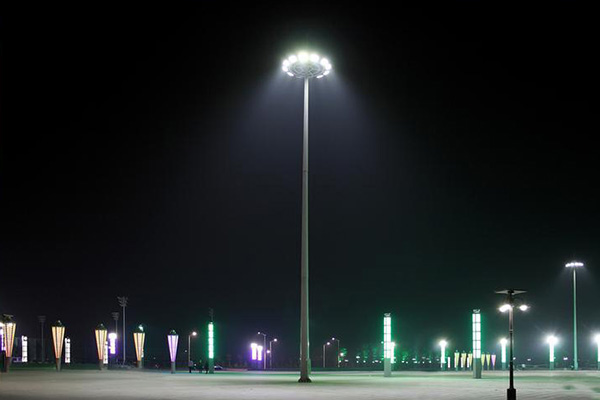
High mast lighting systems operate by elevating multiple high-powered LED fixtures to a significant height. This elevated position allows light to spread evenly across a wide radius.
Modern systems use LED technology, which improves brightness while reducing energy consumption and maintenance costs. Many systems also integrate smart controls such as timers, sensors, or remote monitoring.
Common Applications of High Mast Lights
High mast lighting is widely used in areas requiring large-scale illumination:
1. Highways and Interchanges
Improves driver visibility, reduces accident risk, and enhances night-time traffic flow.
2. Airports
Used for runways, taxiways, and apron areas where consistent lighting is critical for safety.
3. Seaports and Container Yards
Supports cargo handling and logistics operations during night shifts.
4. Stadiums and Sports Facilities
Provides uniform lighting for night games and large events.
5. Industrial Zones
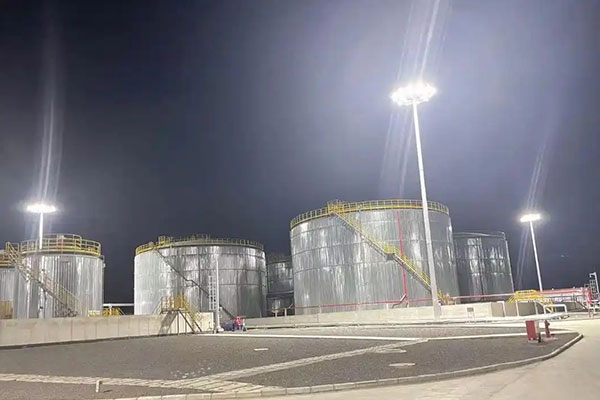
Used in factories, warehouses, and mining sites requiring strong illumination.
6. Public Spaces
Such as large plazas, parking lots, and transport hubs.
Advantages of High Mast Lighting
Wide Illumination Coverage
A single mast can replace multiple conventional light poles, reducing clutter and improving visual uniformity.
Cost Efficiency
Although initial installation may be higher, long-term savings come from reduced maintenance and energy consumption.
Improved Safety
Better visibility reduces accidents in traffic-heavy or industrial environments.
Easy Maintenance
Lowering systems allow maintenance at ground level, eliminating the need for climbing.
Durability
Built to withstand extreme weather conditions such as strong winds, rain, and corrosion.
Energy Efficiency
LED high mast lights consume significantly less power compared to traditional metal halide or sodium lamps.
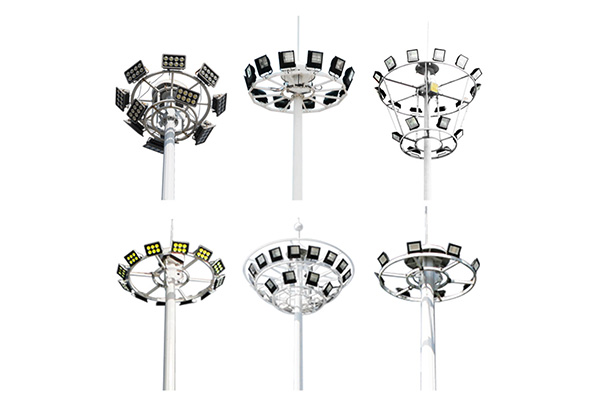
Types of High Mast Lighting Systems
1. Fixed High Mast Lights
The lighting structure is fixed at the top. Maintenance requires lifting equipment.
2. Lowering High Mast Lights
The lighting ring can be lowered using a winch system, making maintenance easier and safer.
3. Mobile High Mast Lights
Portable systems used for temporary lighting in construction sites or emergency areas.
How to Choose the Right High Mast Light
When selecting a high mast lighting system, consider the following factors:
- Height Requirements: Determine the coverage area and select appropriate mast height (15m–40m+).
- Lighting Intensity (Lux Level): Different applications require different brightness levels.
- Wind Load Conditions: Important for structural safety in coastal or high-wind areas.
- Material Quality: Hot-dip galvanized steel is preferred for corrosion resistance.
- LED Power and Beam Angle: Ensure uniform lighting without dark spots or glare.
Installation Considerations
Proper installation is critical for safety and performance:
- Conduct soil and foundation analysis
- Ensure proper grounding for lightning protection
- Follow wind resistance engineering standards
- Use certified electrical components
- Perform regular maintenance checks
Maintenance Tips
To extend the lifespan of your high mast lighting system:
- Clean LED lenses periodically
- Inspect cables and winch systems
- Check for corrosion or structural wear
- Test lighting performance regularly
- Replace faulty LEDs promptly
Conclusion
High mast lighting is an essential solution for large-scale outdoor illumination. Its ability to provide wide coverage, strong brightness, and long-term cost efficiency makes it ideal for highways, ports, airports, and industrial areas.