Choosing between monocrystalline and polycrystalline solar panels is one of the most important decisions when designing a solar energy system. Both technologies convert sunlight into electricity, but they differ in efficiency, cost, performance, aesthetics, and suitability for different environments.
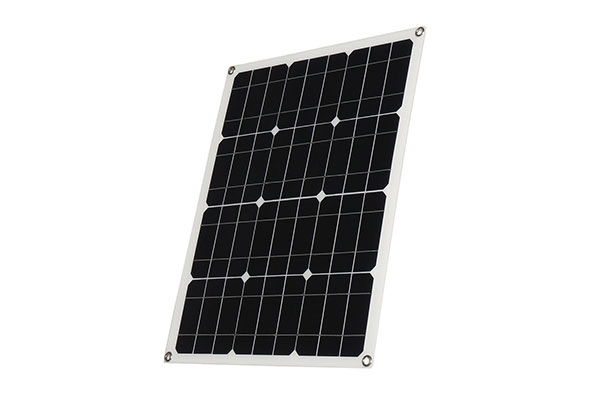
What Are Monocrystalline Solar Panels?
Monocrystalline solar panels—often called “mono panels”—are made from a single, continuous crystal structure of silicon. Their cells have a uniform dark black appearance and rounded edges.
Key Features
- High efficiency: Typically 19–24%
- Higher power output: Ideal for limited roof space
- Better low-light performance
- Longer lifespan and higher durability
- Higher price compared to polycrystalline
How Monocrystalline Panels Work
Because the silicon is highly pure, electrons move more freely, resulting in better electrical performance and higher overall efficiency.
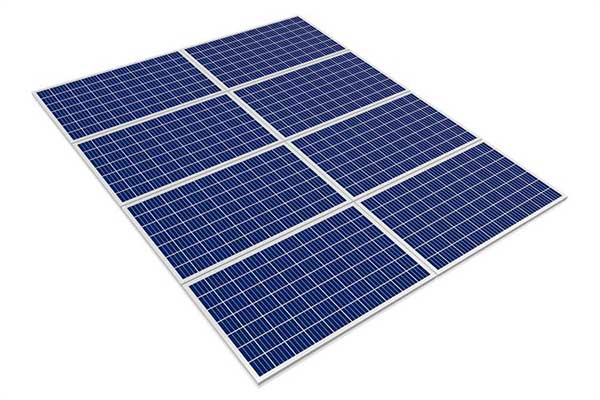
What Are Polycrystalline Solar Panels?
Polycrystalline solar panels—often called “poly panels”—are made by melting multiple silicon crystals together. The surface has a blue, speckled look due to the mixed crystal structure.
Key Features
- Moderate efficiency: Typically 16–18%
- More affordable than monocrystalline
- Good performance in strong sunlight
- Slightly lower heat tolerance
- Shorter lifespan and lower energy output per square meter
How Polycrystalline Panels Work
The multi-crystal arrangement restricts electron flow slightly, which reduces efficiency and power output compared to monocrystalline cells.
Monocrystalline vs. Polycrystalline: Side-by-Side Comparison
| Feature | Monocrystalline | Polycrystalline |
|---|---|---|
| Efficiency | ★★★★★ High (19–24%) | ★★★☆☆ Medium (16–18%) |
| Cost | Higher | Lower |
| Performance in Hot Weathe | Better | Average |
| Low-Light Performance | Better | Good |
| Appearance | Black, uniform | Blue, speckled |
| Lifespan | 25–30 years | 20–25 years |
| Ideal For | Limited space, high energy demand | Budget projects, large installations |
Efficiency Comparison
Monocrystalline Panels
- Lead the market in efficiency.
- Generate more electricity from the same amount of sunlight.
- Perfect for rooftops with limited surface area or shading issues.
Polycrystalline Panels
- Perfectly adequate for many residential and commercial uses.
- Lower efficiency means you need more panels to achieve the same total output.
Performance in Different Climates
1. High temperatures
Monocrystalline panels have a lower temperature coefficient, meaning they maintain output better in hot environments.
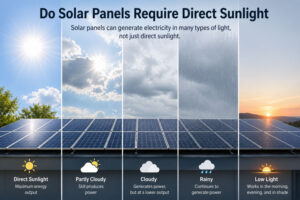
2. Low-light or cloudy conditions
Monocrystalline solar panels outperform polycrystalline panels due to their higher purity and better light absorption.
3. Very sunny regions with ample rooftop space
Polycrystalline panels remain a cost-effective solution when space is not a major concern.
Cost Comparison
Polycrystalline panels usually cost 10–25% less than monocrystalline due to simpler manufacturing processes.
However, monocrystalline panels may offer better lifetime value because of:
- Higher efficiency
- Faster ROI
- Longer lifespan
- Higher power per square meter
- Durability and Lifespan
Both panel types are durable and designed for long-term outdoor use. However, monocrystalline panels generally maintain higher performance after 20+ years, making them a more future-proof investment.
Which Should You Choose?
Choose Monocrystalline Solar Panels If:
- You have limited roof space
- You want maximum efficiency
- You plan a long-term, high-performance solar project
Choose Polycrystalline Solar Panels If:
- You’re working with a limited budget
- You have enough installation area
- A small drop in efficiency is not an issue
- You want a cost-effective solution for large solar farms or industrial projects
Conclusion
Both monocrystalline and polycrystalline panels are reliable and widely used in residential, commercial, and industrial solar systems. Monocrystalline delivers top performance, efficiency, and aesthetics, polycrystalline offers a more affordable alternative with solid reliability.
Your choice ultimately depends on space, budget, desired efficiency, and application type. For most modern homeowners and high-performance solar projects, monocrystalline solar panels are the clear winner, For large-scale installations with lower budget requirements, polycrystalline panels provide excellent value.